
The Rise of AI in the Pharmaceutical Industry
Pharma’s future is here: AI is transforming how drugs are developed, manufactured, and delivered, bringing hope for better treatments and faster solutions.
Dr. Manish Shrivastava
12/19/20244 min read
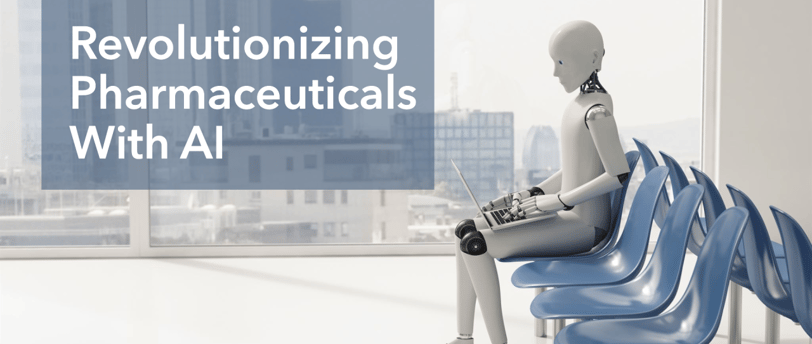
The pharmaceutical industry has long been known for its high-stakes, high-risk nature. With some of the highest failure rates of any business sector, the journey from drug discovery to market is fraught with challenges. Drug candidates entering Phase 1 clinical trials face daunting odds, with success rates ranging between just 9% and 12%. Coupled with the staggering costs—ranging from $1.5 billion to $2.5 billion—to bring a drug from discovery to market, it's clear why the pharmaceutical industry is increasingly turning to machine learning (ML) and artificial intelligence (AI) for solutions.
The High Cost of Failure
The pharmaceutical industry's pursuit of AI and ML is driven by the need to mitigate the high cost of failure. According to Drug Discovery Today, an estimated 60% of all R&D costs in the industry are due to failed projects. These failures often occur because drug candidates do not meet the necessary criteria at various stages of the clinical trial cycle. The potential for AI to revolutionize drug development lies in its ability to process vast amounts of data, identify patterns, and make predictions that could increase the success rates of clinical trials and reduce the time and cost associated with bringing new drugs to market.
AI: The New Frontier in Drug Development
The COVID-19 pandemic underscored the critical role that AI can play in drug development. During the pandemic, AI was instrumental in detecting new variants of the virus by processing massive volumes of images and classifying potentially new features. Moderna, a frontrunner in mRNA vaccine development, credited robotic automation and AI for significantly increasing its production capacity, from 30 mRNA samples a month to 1,000 samples. This rapid scaling of production capacity is a testament to the power of AI in accelerating drug development processes.
The Untapped Potential of Healthcare Data
The healthcare industry is a data-rich environment, with hospitals producing an estimated 50 petabytes of data in 2019 alone. However, the vast majority of this data—97%, according to the World Economic Forum—is not used. This represents a massive opportunity for AI and ML to make a significant impact on healthcare. By harnessing this data, AI systems can improve the quality and effectiveness of drugs, enhance patient outcomes, and streamline healthcare operations.
However, the integration of AI into healthcare is not without its challenges. The industry is highly regulated, and the use of health data requires strict compliance with privacy and security standards. Additionally, the effectiveness of AI models depends on the quality and completeness of the data they are trained on. As a result, strong foundational data engineering and management are crucial to the success of AI in healthcare.
The Financial Commitment to AI in Pharma
The top pharmaceutical companies are well aware of the potential benefits of AI and are making significant investments in R&D to leverage this technology. Market research firm DelveInsight reports that in 2020, Novartis reinvested $9 billion into R&D, accounting for 19% of its revenue. Merck and Pfizer followed suit, with R&D investments of $13.6 billion (28% of revenue) and $9.4 billion (22.4% of revenue), respectively. These substantial investments reflect the industry's commitment to staying at the forefront of innovation and maintaining a competitive edge in the market.
Key Takeaways and Points to Ponder
AI-Assisted Drug Development and Patient Benefit: AI-assisted drug development has the potential to bring therapies to patients sooner. With AI's ability to analyze data and predict outcomes, more targeted therapies could see higher success rates, and product pipelines could expand to explore more complex medical solutions. This means that patients could benefit from new treatments faster, potentially improving outcomes for various diseases.
Leveraging Untapped Health Data: The healthcare industry generates vast amounts of data, but only a fraction of it is currently utilized. The effective use of this data through AI could revolutionize healthcare by improving drug development processes, enhancing patient care, and reducing costs. However, the success of these initiatives will depend on strong data management practices and adherence to regulatory requirements.
Extending AI Beyond Data Science: The benefits of AI are not limited to data scientists. These tools are increasingly being extended to stakeholders across the healthcare industry, including researchers, providers, and manufacturers. As AI becomes more integrated into healthcare operations, it will be essential to ensure that these stakeholders have the training and resources needed to leverage AI effectively.
Easing the Burden on Caregivers: One of the highest priorities for AI in healthcare is easing the burden on caregivers. By automating routine tasks and providing decision support, AI can free up healthcare professionals to focus on more complex and patient-centered care. This shift could lead to improved patient outcomes and greater job satisfaction for healthcare workers.
Bringing Personalized Medicine Closer to Reality: AI is playing a crucial role in the development of personalized medicine. By analyzing individual patient data, AI can help create customized treatment plans that are more effective and have fewer side effects. As AI technology continues to advance, personalized medicine could become the standard of care, offering patients more tailored and effective treatments.
Navigating the Regulatory Landscape: The pharmaceutical industry is highly regulated, and the use of AI in drug development and healthcare must comply with a complex web of regulations. Companies looking to leverage AI will need to work closely with regulatory bodies to ensure that their innovations meet the necessary standards for safety and efficacy.
The Future of AI in Pharma: The future of AI in the pharmaceutical industry is bright, with the potential to transform every aspect of drug development and healthcare delivery. However, realizing this potential will require ongoing investment, collaboration between industry and regulatory bodies, and a commitment to ethical and responsible AI use.
Connect
Your partner in growth, market expansion, and digital execution across industries.
shri@medora.biz
+62-822-10-20-7000
© 2025. All rights reserved.